Home / Resource Center / Flooring
Flooring · 6 min readFloors in Southwest Florida live a hard life: 70%+ average humidity, sand tracked in year-round, and the occasional tropical-storm water intrusion. Some materials shrug all of that off; others swell, cup and delaminate. Here's the honest rundown.
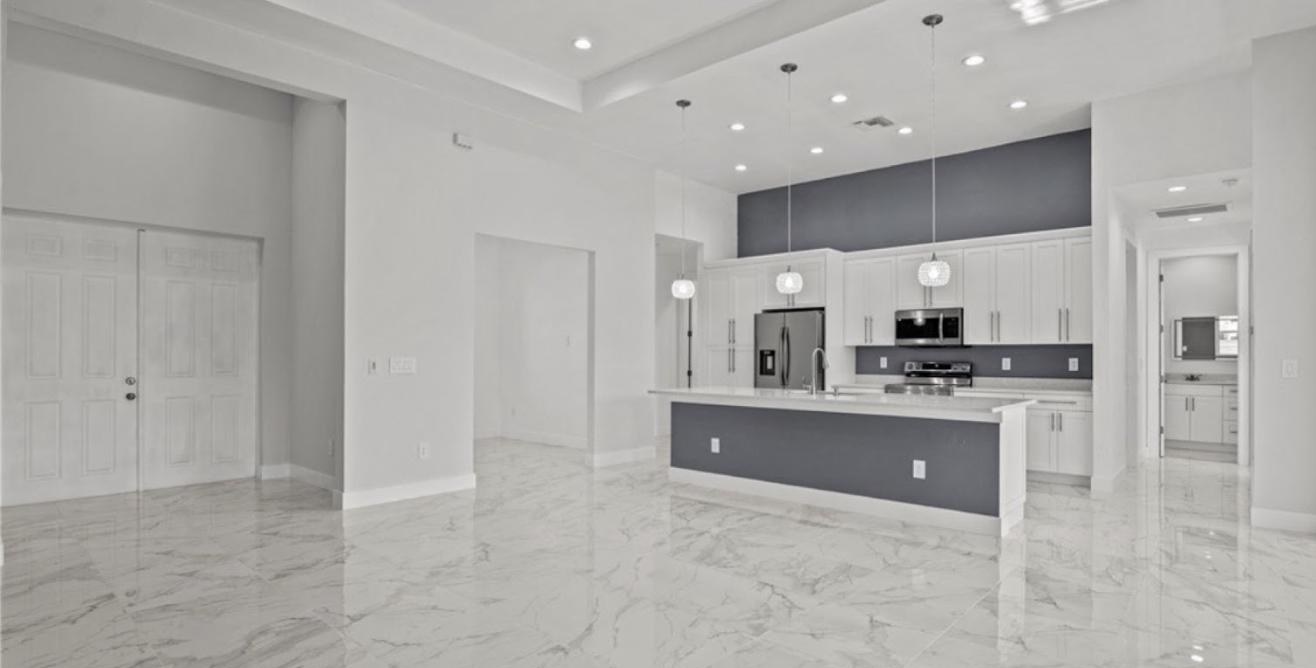
Wood and wood-based products absorb moisture from the air and expand. In climates with dry winters, they get a chance to shrink back. Here, they don't — which is why solid hardwood is the riskiest common flooring in coastal Florida, especially in homes that sit closed up over summer.
Effectively waterproof, immune to humidity, and cool underfoot. The weak point is grout, which stains and grows mildew if left unsealed. Sealing grout every few years keeps tile floors looking new for decades.
The go-to wood look for Florida. Fully waterproof cores, no swelling, and modern lines are convincingly wood-grained. Choose a thicker wear layer (20 mil+) for pets and rentals. One caveat: extreme heat in unconditioned rooms can expand cheap LVP — buy quality and follow expansion-gap specs.
Cross-ply construction resists humidity movement far better than solid wood. If you want real wood in SWFL, engineered is the way — kept in a consistently air-conditioned home.
Beautiful, but it moves with every humidity swing. Expect seasonal gapping and cupping unless the home's climate is tightly controlled year-round.
For garages, lanais and modern interiors, sealed concrete is bulletproof. Epoxy and polyaspartic coatings turn a garage floor into a showroom surface that laughs at humidity, tires and spills — and they're a natural companion project to a repaint.
A worn garage floor or a slick painted lanai is often a coating problem, not a replacement problem. Polyaspartic systems cure fast, resist UV yellowing (epoxy's weakness in sunlit spaces), and can include anti-slip texture — worth asking about before you rip anything out.
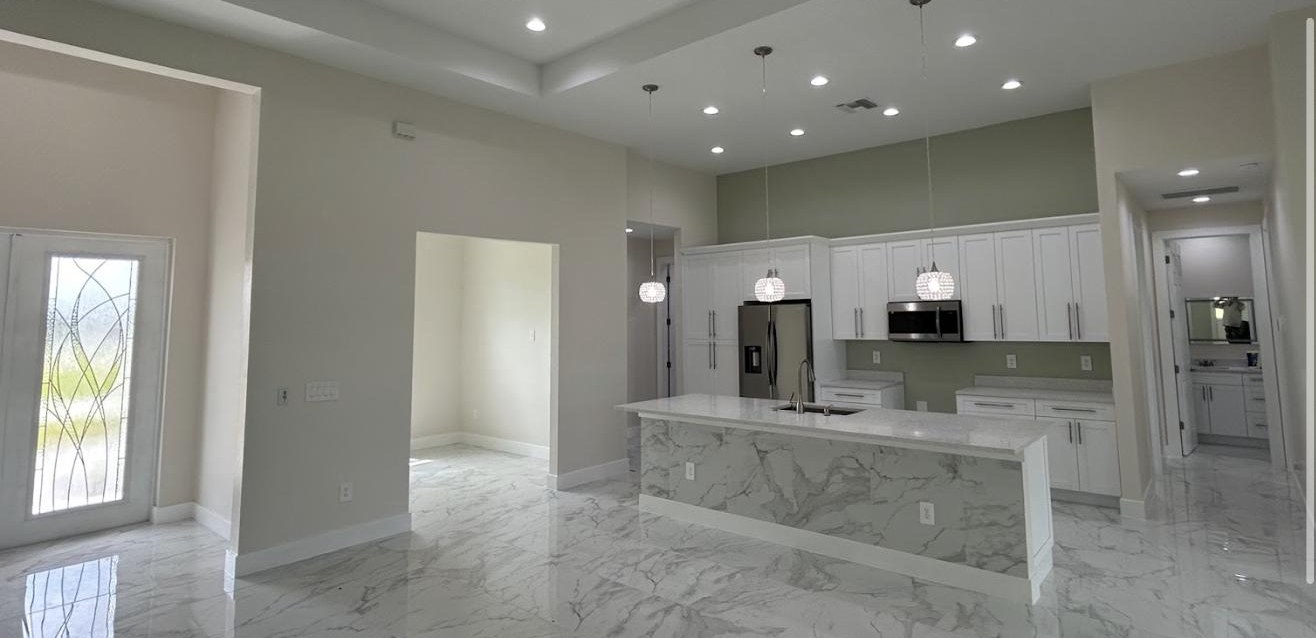
Porcelain tile, luxury vinyl plank and sealed or coated concrete handle Florida humidity best. Engineered hardwood works in consistently air-conditioned homes; solid hardwood is the riskiest choice.
Quality LVP with a rigid waterproof core performs very well. Cheap products in hot, unconditioned rooms can expand - follow the manufacturer's expansion gap and keep sun-baked rooms ventilated.
Polyaspartic resists UV yellowing and cures faster, making it better for garages and lanais that get sunlight. Epoxy remains a solid budget option for fully shaded floors.
You can, but expect seasonal movement like gapping and cupping unless humidity is tightly controlled year-round. Most flooring pros recommend engineered wood or LVP instead.
Free estimates. Fast responses. A finish you'll be proud of.
Get a Free Quote Today